


Making a double - layer cake with a 9 - inch square cake pan can be a delightful and rewarding experience. As a supplier of 9 - inch square cake pans, I'm excited to share with you the step - by - step process of creating this delicious treat.
Ingredients and Tools
First, let's gather all the necessary ingredients and tools. For the cake, you'll need all - purpose flour, granulated sugar, baking powder, baking soda, salt, unsalted butter, eggs, milk, and vanilla extract. The quantities will depend on the specific recipe you choose, but a common ratio for a basic cake is about 2 cups of flour, 1.5 cups of sugar, 2 teaspoons of baking powder, 1/2 teaspoon of baking soda, 1/2 teaspoon of salt, 1 cup of unsalted butter (softened), 4 eggs, 1 cup of milk, and 2 teaspoons of vanilla extract.

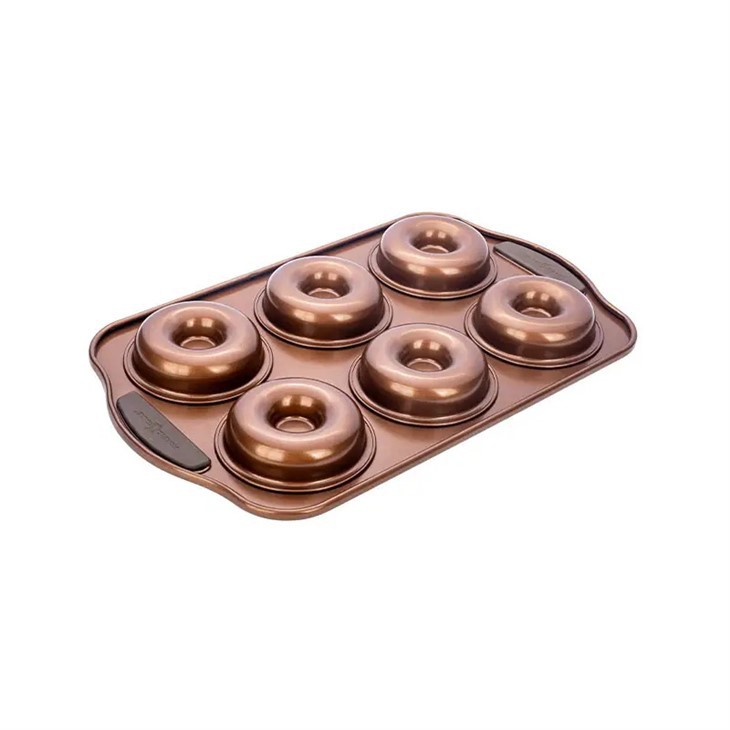
As for the tools, in addition to our high - quality 9 - inch square cake pan, you'll also need a mixing bowl, an electric mixer, a spatula, a cake tester (a toothpick works well), parchment paper, and an oven. And if you want to explore other baking options later, you might be interested in our 24 Cup Mini Muffin Pan, 6 Cup Donut Pan with Silicone Handles, or 12 X 17 in Cookie Sheet Pan.
Preparing the Cake Pan
Before you start mixing the batter, it's crucial to prepare the 9 - inch square cake pan properly. First, preheat your oven to the temperature specified in your recipe, usually around 350°F (175°C). Then, cut a piece of parchment paper to fit the bottom of the pan. Grease the pan with butter or non - stick cooking spray, and line the bottom with the parchment paper. This will prevent the cake from sticking to the pan and make it easier to remove once it's baked.
Mixing the Batter
Now, let's start making the batter. In a large mixing bowl, combine the flour, sugar, baking powder, baking soda, and salt. Use a whisk to mix them well. In another bowl, beat the softened butter until it's creamy. Add the eggs one at a time, beating well after each addition. Then, stir in the vanilla extract.
Gradually add the dry ingredients to the butter - egg mixture, alternating with the milk. Start and end with the dry ingredients, and mix until just combined. Be careful not to over - mix the batter, as this can result in a tough cake. Over - mixing develops the gluten in the flour, which can make the cake dense and chewy.
Baking the Cake
Once the batter is ready, pour it evenly into the prepared 9 - inch square cake pan. Use a spatula to smooth the top of the batter. Place the pan in the preheated oven and bake for the time specified in your recipe, usually around 25 - 35 minutes. To check if the cake is done, insert a cake tester (or a toothpick) into the center of the cake. If it comes out clean, the cake is ready. If there's batter on the tester, continue baking for a few more minutes and check again.
Cooling the Cake
After the cake is baked, remove it from the oven and let it cool in the pan for about 10 minutes. Then, run a knife around the edge of the cake to loosen it from the pan. Invert the cake onto a wire rack and remove the parchment paper. Let the cake cool completely before moving on to the next step.
Making the Frosting
While the cake is cooling, you can make the frosting. There are many types of frosting you can choose from, such as buttercream, cream cheese frosting, or chocolate ganache. For a classic buttercream frosting, you'll need unsalted butter, powdered sugar, milk, and vanilla extract.
In a mixing bowl, beat the softened butter until it's smooth. Gradually add the powdered sugar, one cup at a time, and mix well. Add a little milk and vanilla extract, and continue mixing until the frosting reaches the desired consistency. If the frosting is too thick, add a little more milk. If it's too thin, add more powdered sugar.
Assembling the Double - Layer Cake
Once the cake is completely cooled, it's time to assemble the double - layer cake. Use a serrated knife to cut the cooled cake horizontally into two even layers. Place one layer on a cake plate or a cake stand. Spread a layer of frosting over the top of the first layer. Then, carefully place the second layer on top of the frosting.
Spread the remaining frosting over the top and sides of the cake. You can use a spatula to create a smooth finish or get creative with different frosting techniques, such as swirling or piping. You can also add decorations, such as sprinkles, fresh fruit, or edible flowers, to make the cake look even more appealing.
Tips and Tricks
- Measure accurately: When measuring the ingredients, use measuring cups and spoons for dry ingredients and a liquid measuring cup for liquids. Accurate measurements are crucial for the success of your cake.
- Let the ingredients come to room temperature: This includes the eggs, butter, and milk. Room - temperature ingredients mix together more easily and result in a smoother batter.
- Don't open the oven door too often: During the baking process, opening the oven door can cause the temperature to drop, which may affect the baking of the cake and cause it to sink or crack.
- Store the cake properly: If you're not serving the cake immediately, store it in an airtight container at room temperature for up to 2 days or in the refrigerator for up to 5 days.
Conclusion
Making a double - layer cake with a 9 - inch square cake pan is a wonderful way to showcase your baking skills and create a delicious treat for your family and friends. Our 9 - inch square cake pans are designed to provide even heat distribution, ensuring that your cake bakes perfectly every time.
If you're interested in purchasing our 9 - inch square cake pans or any of our other baking products, we'd love to hear from you. Whether you're a professional baker or a home cooking enthusiast, our products are suitable for all levels of baking experience. Contact us to start a procurement discussion and take your baking to the next level.
References
- "The Cake Bible" by Rose Levy Beranbaum
- "Joy of Cooking" by Irma S. Rombauer, Marion Rombauer Becker, and Ethan Becker