


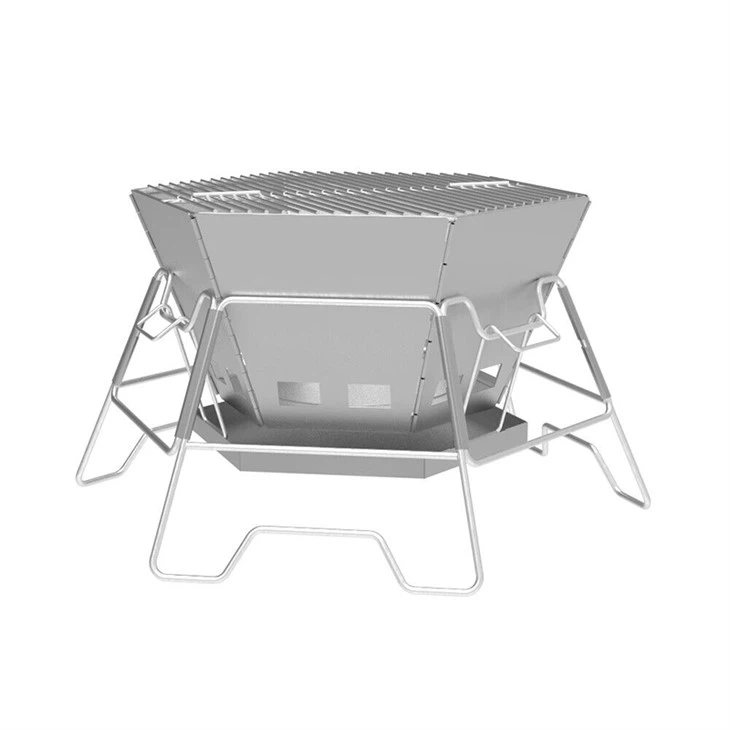
Maintaining the temperature on an outdoor BBQ grill is crucial for achieving perfect grilling results. As a supplier of high - quality outdoor BBQ grills, including the Foldable Barbecue Grill Roaster, Large Folding Camping Charcoal BBQ Grill, and Hexagonal Fire Table Folding Portable Barbecue Grill, I understand the importance of temperature control and am here to share some effective tips.
Understanding the Basics of Grill Temperature
Before diving into temperature maintenance, it's essential to understand the different temperature zones on a grill. Generally, there are three main zones: direct heat, indirect heat, and a cool zone. The direct heat zone is right above the heat source, where the temperature is the highest. This zone is ideal for searing steaks or quickly cooking thin cuts of meat. The indirect heat zone is located away from the direct heat, and it's suitable for slow - cooking larger cuts of meat or delicate foods that need more gentle cooking. The cool zone, usually at the far edge of the grill, can be used to rest the cooked food or to prevent over - cooking.
Charcoal Grills
Lighting the Charcoal
The first step in maintaining the temperature on a charcoal grill is to light the charcoal properly. Use a charcoal chimney starter to light the charcoal evenly. Fill the chimney with charcoal and place some crumpled newspaper or fire starter cubes at the bottom. Ignite the paper or cubes, and in about 10 - 15 minutes, the charcoal will be ready. Once the charcoal is glowing red and covered with a thin layer of ash, carefully pour it into the grill.
Adjusting the Airflow
Airflow is the key to controlling the temperature on a charcoal grill. Most charcoal grills have vents at the bottom and on the lid. Opening the bottom vents allows more oxygen to reach the charcoal, which increases the heat. Closing the vents reduces the oxygen supply and lowers the heat. To maintain a high temperature, open the bottom vents fully. For a medium temperature, open them about halfway, and for a low temperature, leave them slightly open. The lid vents also play an important role. Opening the lid vents helps to release the smoke and heat, while closing them can trap the heat inside the grill.
Adding More Charcoal
As the grilling progresses, the charcoal will burn out, and the temperature will start to drop. To maintain a consistent temperature, you can add more charcoal periodically. Use long - handled tongs to add small amounts of pre - lit charcoal to the grill. This will help to keep the heat stable without causing a sudden spike in temperature.
Gas Grills
Preheating the Grill
Preheating is essential for gas grills. Turn on all the burners to high and close the lid. Let the grill preheat for about 10 - 15 minutes. This ensures that the grill reaches the desired temperature and helps to sear the food properly.
Adjusting the Burner Controls
Gas grills are generally easier to control the temperature compared to charcoal grills. Most gas grills have individual burner controls. To increase the temperature, turn up the burner knobs. To lower the temperature, turn them down. If you need to create different temperature zones on a gas grill, you can turn off some of the burners. For example, if you have a three - burner grill, you can turn on the two outer burners for direct heat and leave the middle burner off for indirect heat.
Checking the Gas Supply
Make sure that the gas tank has enough fuel. A low gas supply can cause the temperature to fluctuate. Check the gauge on the gas tank regularly, and if it's running low, replace it with a full tank.
Infrared Grills
Understanding Infrared Technology
Infrared grills use infrared burners to heat the food directly. The infrared burners convert the gas into radiant heat, which can reach very high temperatures quickly. This type of grill is great for searing steaks and achieving a crispy exterior while keeping the inside juicy.
Temperature Control
Infrared grills usually have a single temperature control knob. To set the temperature, turn the knob to the desired setting. However, it's important to note that infrared grills heat up very fast, so you need to be careful not to over - cook the food. Preheat the grill for about 5 - 10 minutes before cooking.
Other Tips for Temperature Maintenance
Using a Thermometer
A good quality grill thermometer is a must - have tool for maintaining the temperature on any type of grill. Place the thermometer in the middle of the grill, away from the direct heat source. This will give you an accurate reading of the internal temperature of the grill. Check the thermometer regularly and adjust the heat accordingly.

Keeping the Grill Lid Closed
Every time you open the grill lid, you let out a significant amount of heat. Try to keep the lid closed as much as possible during the cooking process. Only open it when you need to flip the food or check the progress. If you need to baste the food, use a long - handled basting brush and do it quickly without leaving the lid open for too long.
Protecting the Grill from the Elements
Weather conditions can affect the temperature on an outdoor grill. If it's windy, the wind can blow away the heat and make it difficult to maintain a consistent temperature. You can use a windbreak to protect the grill. If it's raining or snowing, make sure to cover the grill with a waterproof cover when it's not in use.
Conclusion
Maintaining the temperature on an outdoor BBQ grill is an art that requires practice and patience. Whether you're using a charcoal, gas, or infrared grill, understanding the principles of temperature control and following the tips mentioned above will help you achieve perfect grilling results every time. As a supplier of outdoor BBQ grills, we offer a wide range of high - quality grills that are designed to make temperature control easier. If you're interested in purchasing our products or have any questions about grill temperature maintenance, please feel free to contact us for procurement and further discussions.
References
- "The Complete Idiot's Guide to Grilling" by Kevin Kolman
- "Grilling for Dummies" by Adam Perry Lang